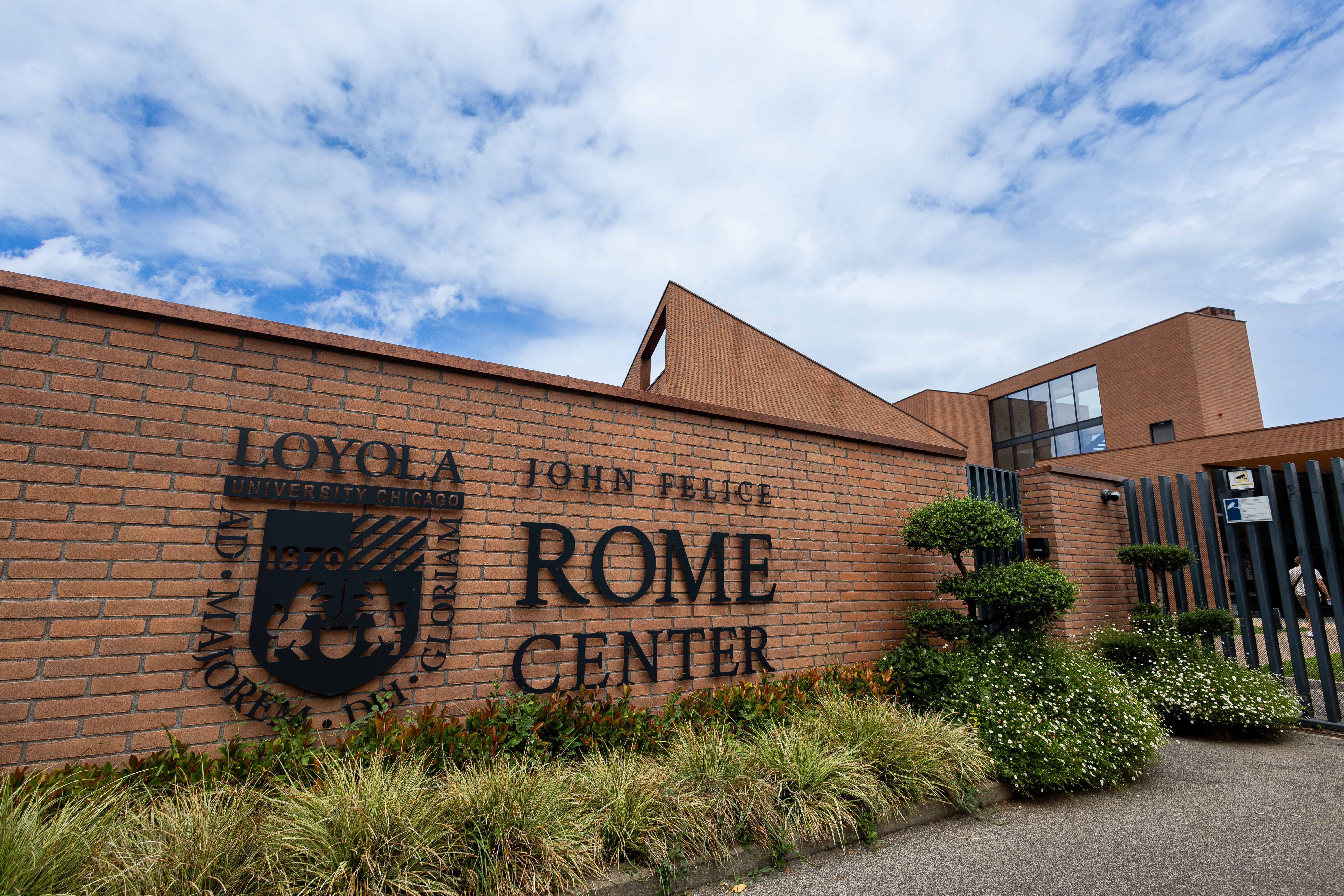
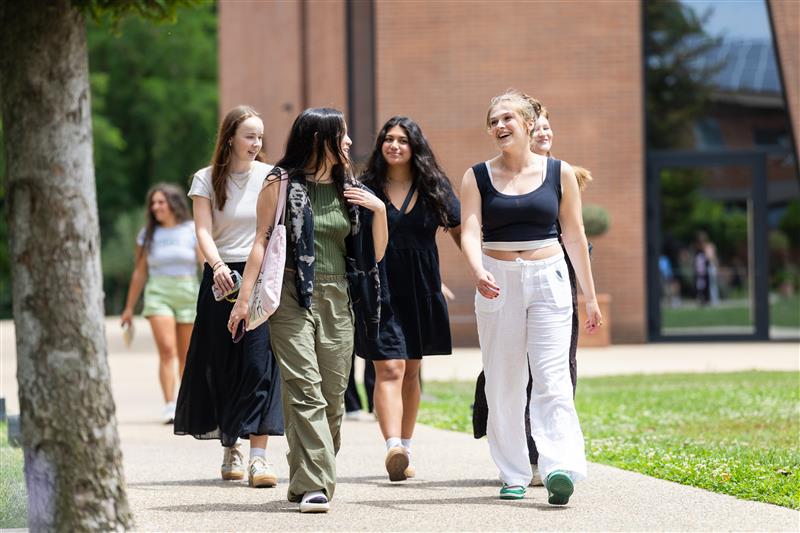
.png "Images of Loyola students in Rome, Italy.")
When Rome Is the Classroom
When Rome Is the Classroom
Through study abroad opportunities in Rome, School of Education students immerse themselves in a different culture and examine the role of teachers and learners.
By Daniel P. Smith
As her senior year at Loyola University Chicago approached, Sophia Vanneste hungered for something different: an opportunity to escape the routines of college life and supercharge introspection about her future.
An elementary education major, Vanneste took advantage of one of the School of Education’s hallmark programs: an intensive two-week summer course in Rome titled Philosophy of Education.
With the Italian city as her classroom, Vanneste and her cohort visited historic sites like the Colosseum and the Vatican as well as lesser-explored venues like the Jewish Ghetto. In doing so, they examined the purpose of education and the role of teachers and learners. They immersed themselves in a foreign land, which sparked greater empathy for students from diverse backgrounds. And they penned their own personal philosophy of education, an intimate treatise defining their core beliefs, values, and goals about teaching.
Vanneste called her two weeks in Rome “a launching pad for inquiry and deep, intensive thinking.” It unlocked new perspectives. It ignited creative plans of using physical spaces to stimulate learning. It cultivated richer relationships with peers and School of Education faculty.
“I learned exploration can really prompt new insights and different ways of thinking,” says Vanneste, a Minnesota native currently completing her student teaching experience at an elementary school in north suburban Skokie.
‘A high-impact learning experience’
Siobhan Cafferty, the School of Education’s senior associate dean of academic affairs and coordinator of international programs, champions study abroad as a dynamic opportunity for Loyola students to shape their own teaching practices and leadership styles. She calls these immersive cultural opportunities “a high-impact learning experience for students” that awakens innovative ideas and stirs personal and professional growth.
“When students study abroad, we believe it prompts more intentional reflection on the world we live in and our place in it, including the role we play in educating others,” Cafferty says.
While undergraduates can take Philosophy of Education—a required course in the teacher preparation program—during the traditional academic semester on Loyola’s Lake Shore Campus, they can also choose to complete the class during an intensive summer stint in Rome as Vanneste did.
Living at the John Felice Rome Center, taking public transportation, and visiting cultural and historical sites across Rome, students are fully engrossed in their studies. Through their travels and discussion, they gain exposure to broad perspectives and investigate the role of education in society, which heightens adherence to the core principles of social justice.
“Students really began to ask themselves: What is a quality education and what does it mean to ensure all students can access it?” Cafferty says.
Graduate students similarly have an opportunity to study in Rome, as the School of Education offers 3-4 classes each summer attended by upwards of 45 students. As graduate students are often online learners and working professionals, including school administrators, counselors, and teachers, the courses feature more immersive cultural dinners and site visits as well as a more intense focus on Ignatian pedagogy, particularly discernment and reflection.
Elevated understanding
Studying abroad honors the treasured Jesuit tradition of learning and service to humanity through cultural exchange. For centuries, Jesuit priests and lay people affiliated with Jesuit institutions have traveled the globe to bring knowledge and understanding to different corners of the world. In doing so, they have prioritized full immersion in local cultures to generate mutual understanding and respect.
“The Jesuits understand learning is a two-way street,” Cafferty says.
When School of Education students study abroad, Cafferty says they are challenged to step out of themselves and their everyday while navigating unfamiliar physical and cultural terrain. The adaptive and responsive experience encourages reflection and cultivates a more earnest commitment to engaging with diverse populations.
“If you can better understand yourself as a learner, then that self-knowledge and empathy can translate into culturally inclusive practices in the classroom as well as more profound care for learners and the profession,” Cafferty says.